
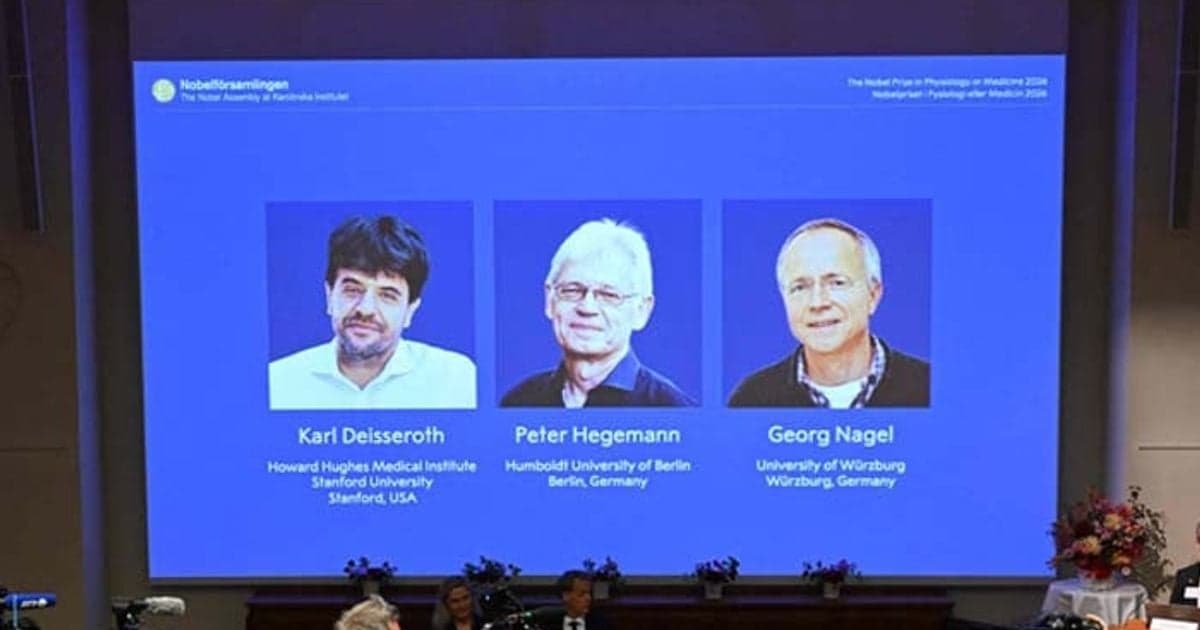
Karl Deisseroth, Peter Hegemann, and Georg Nagel win 2026 Nobel Prize in Medicine
AI Summary
Karl Deisseroth, Peter Hegemann, and Georg Nagel have been awarded the 2026 Nobel Prize in Medicine for pioneering optogenetics to control brain activity with light.
The 2026 Nobel Prize in Physiology or Medicine has been awarded to scientists Karl Deisseroth, Peter Hegemann, and Georg Nagel for their development of optogenetics, a method that uses light to control nerve cells.
The Nobel Assembly at the Karolinska Institute announced the winners on Monday, noting that the trio's work on "light-gated ion channels" has fundamentally altered the understanding of how the brain works. Karl Deisseroth, a 54-year-old psychiatrist and neurologist at Stanford University, shares the honor with 71-year-old Peter Hegemann of Humboldt University and 73-year-old Georg Nagel of the University of Würzburg. The laureates will share a prize of 12 million Swedish kronor, which is approximately $1.2 million or £900,000.
The Guardian and BBC News detailed how the discovery originated from Hegemann's study of green algae, which use light-sensitive proteins called channelrhodopsins to navigate. Nagel and Hegemann demonstrated that these proteins could create electrical impulses in cells when exposed to blue light. Deisseroth later applied this to mammals, using optic fibers to deliver light into the brains of mice to trigger specific movements and behaviors.
The Nobel Committee stated that researchers can now use light to switch individual neural circuits on or off, allowing them to study the biological foundations of memories, feelings, and psychiatric disorders. France 24 noted that the method is currently used in laboratories worldwide. Additionally, researchers are taking the first steps toward using optogenetics in clinical medicine to attempt to restore sight in people with visual impairments.
The announcement marks the 117th time the prize has been awarded. The Guardian highlighted that of the 235 total laureates, only 14 have been women and none have been black scientists. This year's award kicks off Nobel week, with prizes in physics, chemistry, literature, and peace to follow.
Background
Last year, the Nobel Prize in Medicine was awarded to three scientists for their research into the immune system. The current award recognizes the foundation of a new era in neuroscience that began with discoveries in the early 2000s.
How outlets covered it
NatureMedicine Nobel awarded for brain ‘switch’ that controls neurons with light: live updates
 Image: Latest articles - The Japan Times
Latest articles - The Japan TimesScientists win Nobel Prize in medicine for work on ‘light-gated ion channels and optogenetics’
Image: "when:24h site:reuters.com" - Googl
"when:24h site:reuters.com" - GooglGerman and US scientists win Nobel medicine prize for work on optogenetics - reuters.com
 Image: BBC News
BBC NewsNobel Prize awarded for showing how nerve cells shape feelings
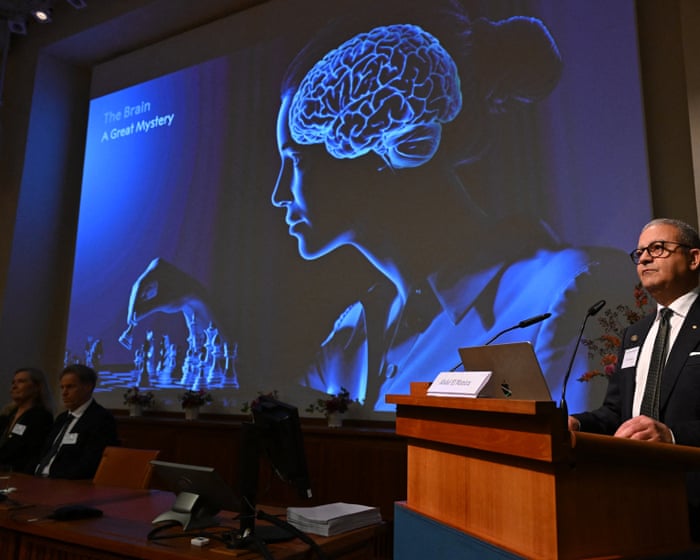 Image: The Guardian
The GuardianNobel prize in medicine 2026 awarded for research into mysteries of brain
France 24 - International breakingRead the report
Get our daily briefing first.
We're starting a short daily email with the stories most outlets are covering. Join the list to get the first one.
Free. No spam.
Discussion
No comments yet. Be the first to start the conversation!