
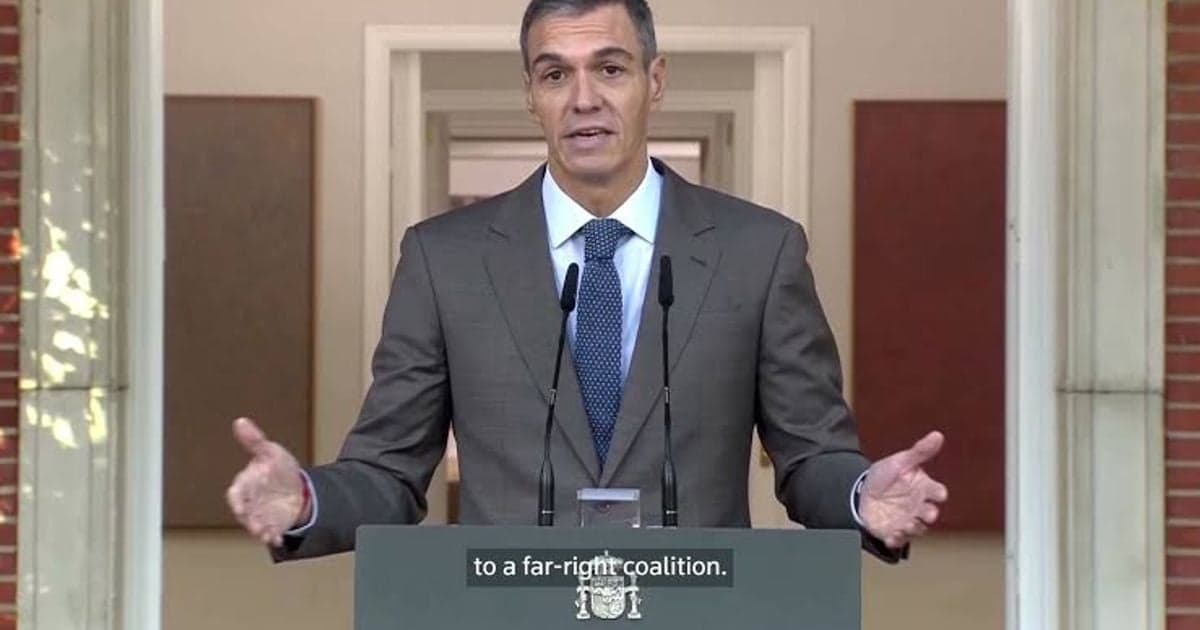
Spanish Prime Minister Sánchez calls snap election for November 29
AI Summary
Prime Minister Pedro Sánchez calls a snap election for Nov. 29 after parliamentary defeats on housing laws and mass protests over rising rental costs.
Prime Minister Pedro Sánchez has scheduled an early national election for November 29 after his minority government suffered parliamentary defeats over housing reform legislation.
In a televised address on Monday, Sánchez announced the snap vote following the rejection of two decree laws intended to protect tenants in the rental market. The BBC reported that the Prime Minister seeks a "broader progressive majority" to overcome what he described as "resistance of the elites" and to address issues including public services and inequality.
Public pressure mounted over the weekend as tens of thousands of people protested in cities such as Madrid, Valencia, and Barcelona. According to International, the unrest followed the September eviction of an 87-year-old disabled woman from the home she had lived in for 70 years. The BBC noted she was unable to afford a sharp rent increase, an event that catalyzed nationwide anger over housing stock and unaffordable rents.
The opposition leader, Alberto Núñez Feijóo of the People's Party, welcomed the news, stating that Spaniards would finally have a chance to choose "change" over what he characterized as "incompetence" and "corruption." While the People's Party won the most seats in 2023, they lacked a majority; Sánchez has remained in power since June 2018 through a coalition with the Sumar alliance and support from regional nationalist groups.
Beyond housing, the government has faced challenges regarding corruption scandals and immigration, specifically following the arrival of thousands of migrants in Ceuta in July. International reported that although Spain's economy grew by 0.7% in the second quarter, outpacing the euro area average, voters remain concerned with stagnant wages and the cost of living.
Background
Spain was not scheduled to hold a general election until the summer of 2027. Most current opinion polls suggest the conservative People's Party may emerge as the largest group in the upcoming vote, though they would likely require support from the hard-right Vox party to form a government.
How outlets covered it
 Image: International
InternationalSpain's PM Sanchez calls snap election after housing crisis protests
 Image: International homepage
International homepageSpanish prime minister Pedro Sánchez calls snap election
 Image: BBC News
BBC NewsSpanish PM Sánchez calls early election after housing protests
Image: "when:24h site:reuters.com" - Googl
"when:24h site:reuters.com" - GooglPODCAST: Spain early election, Yemen offensive, SCOTUS docket and Nobels - reuters.com
Get our daily briefing first.
We're starting a short daily email with the stories most outlets are covering. Join the list to get the first one.
Free. No spam.
Discussion
No comments yet. Be the first to start the conversation!