

AI Summary
New data shows Swiss glaciers shrank by 5.5% this year, totaling a near 20% loss in five years as record heatwaves transform alpine landscapes into rock deserts.
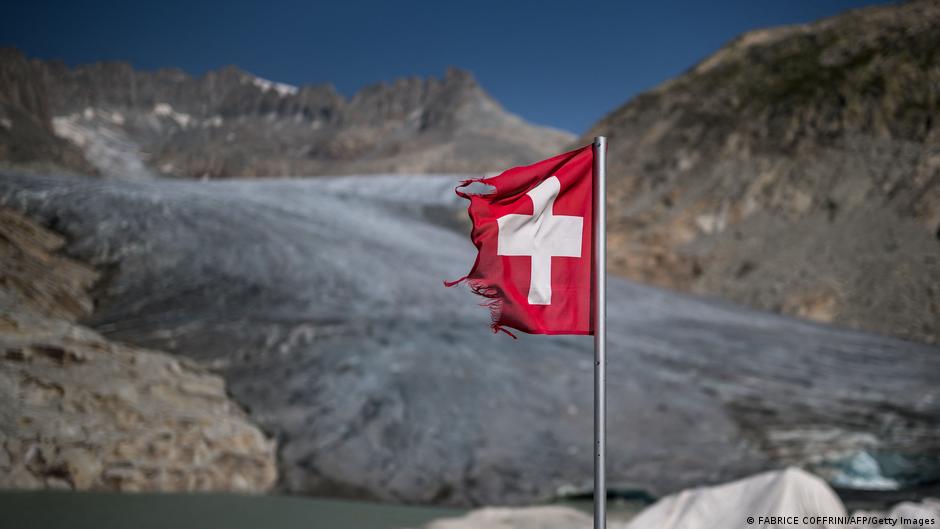
Swiss glaciers lost 5.5% of their total ice volume in 2026, contributing to a near 20% decline over the last five years. According to the GLAMOS network, this rapid shrinkage followed a winter with low snowfall and record-breaking summer heatwaves.
Key details
- •The 5.5% reduction in 2026 represents the second-largest drop on record, according to the Glacier Monitoring in Switzerland (GLAMOS) network.
- •Data from the Swiss Glacier Monitoring Network and the Swiss Commission for Cryosphere Observation shows that the mean thickness of individual glaciers decreased by 2.5 to 4 meters this year.
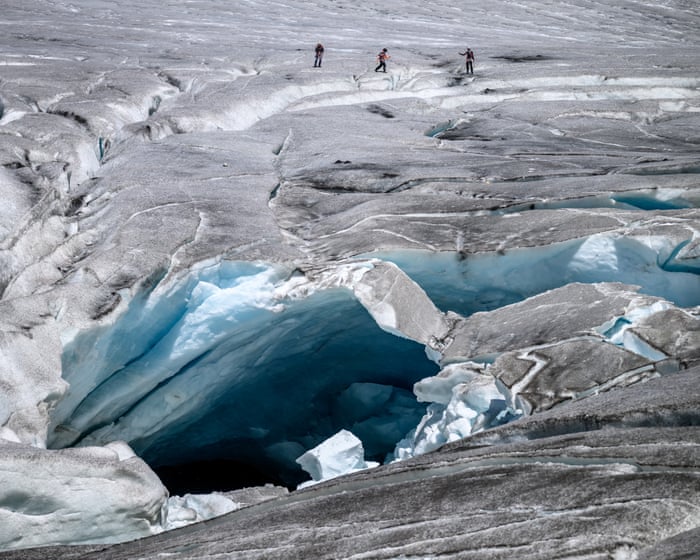
- •According to The Guardian, glaciologist Matthias Huss noted that glaciers are increasingly collapsing from the inside due to internal streams creating cavernous holes, rather than just melting from the surface.
- •MeteoSwiss reported that the summer half-year of 2026 was the hottest and driest period in Switzerland since records began in 1864.
- •Deutsche Welle reports that scientists attributed the current warming trends entirely to human-caused climate change.
Background
The Alps are located in Europe, a region reported by The Guardian and Deutsche Welle to be warming at twice the global average. Scientists describe the current landscape of some former glacier sites as "moonlike" rock deserts, noting that areas covered by hundreds of meters of ice a generation ago are now barren.
Why it matters
Experts warn that the rapid retreat of ice poses a future threat to water supplies. Matthias Huss, chief of GLAMOS, stated that Alpine glaciers are unlikely to survive in the long term under these conditions, with some individual sites expected to disappear entirely within 10 to 15 years.
How outlets covered it

Get the story before everyone else.
1-minute briefings. Zero noise. Straight to your inbox.
Join our growing community of readers
Discussion
No comments yet. Be the first to start the conversation!